Food & restaurants / Restaurants

For restaurants.
A more relevant approach.

Cuisine positioning, menu clarity and reservation enquiries.

The starting situation

Give guests a reason to choose your table.

Cuisine positioning, menu clarity and reservation enquiries. The first step is to check what already works and identify the specific gap. A different business type should not receive the same campaign and reporting plan by default.

The feed looks busy but the food, atmosphere and occasion are unclear. Our proposed response: Choose a specific story and connect it to a useful next action.

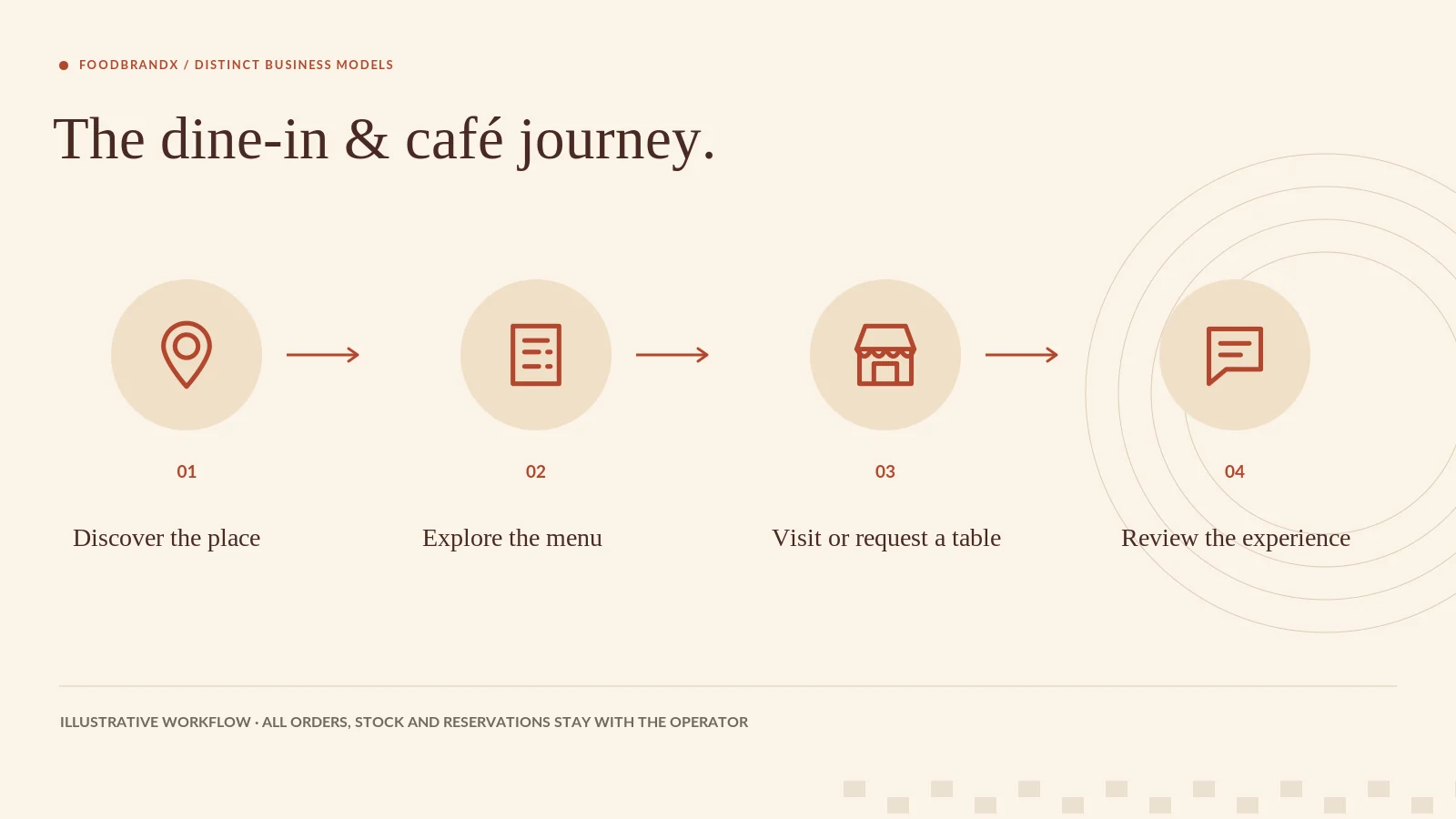
Diagram: the dine-in and café journey — discover the place, explore the menu, visit or request a table, review the experience
The customer experience

Appetite-to-return-visit programme.

These are the stages we design around. Open the interactive map to inspect the work and handoff.

  1. 01

    Crave

    Show what makes the cuisine, product or place distinctive.

    Food story and content direction
  2. 02

    Choose

    Clarify menu, ingredients supplied by the client, pricing and service format.

    Menu or product presentation
  3. 03

    Order or visit

    Connect to the real ordering, reservation or enquiry process.

    Action-ready local journey
  4. 04

    Return

    Support permission-based repeat communication and genuine feedback.

    Retention and reputation workflow
What we would review

Measures that match
this business journey.

  • Tracked order or reservation handoffs
  • Relevant local enquiries
  • Client-recorded repeat visits
  • Feedback themes addressed
Food claims, ingredients, allergy information, prices and delivery terms require owner verification. Orders and payments remain with the client system.
Ways to work

A defined engagement.
A clear starting point.

Choose the type of help you need. Each engagement is standalone; scope is confirmed before any commitment.
Find the real problem

Diagnose the problem

Not sure what is really holding the business back? Start with an evidence-backed diagnosis and a clear priority.

from₹22,000 one-time
  • Review of your agreed records and current customer journey
  • Customer questions, objections and alternatives reviewed
  • A baseline for relevant orders and promoted-item contribution
  • Positioning and messaging recommendation
  • An evidence-backed diagnosis: priorities and what can wait
  • A clear, written scope for the fix
Keep it improving

Operate & improve

Keep the fixed journey working: monitoring, updates, workflow maintenance, suitable experiments and honest reporting.

from₹70,000 / month
  • Monitoring of the journey and information accuracy
  • Information updates and workflow maintenance
  • Suitable experiments with comparison periods
  • Service-feedback response standards
  • Monthly work log, issues resolved and next decisions

Proposed planning fees, not a binding quotation. Media spend, applicable taxes, software, on-site shoots, travel, custom development and specialist review are additional unless explicitly agreed. No sales, ranking or conversion guarantees.


Restaurants: questions

Before restaurants
commission anything.

Still unsure? Ask us directly.

What does FoodBrandX do for restaurants?

Give guests a reason to choose your table. The work covers cuisine positioning, menu clarity and reservation enquiries, measured to a profitable repeat order.

Where should restaurants start?

Start with the gap closest to the customer’s decision. A common one: the feed looks busy but the food, atmosphere and occasion are unclear. Our first response: choose a specific story and connect it to a useful next action. If the problem is unclear, Diagnose the problem (from ₹22,000) finds it first.

How much does branding for restaurants cost?

Proposed starting fees are ₹22,000 for Diagnose the problem, ₹38,000 for Fix my order-to-repeat-visit journey and ₹70,000 per month for Operate & improve. The final quotation follows a written scope; taxes, media spend and third-party costs are extra.

The next considered step

A reason to return.
Let’s start there.

Tell us about the business, the gap and the work you need. Start with a useful brief—not a bigger package.